August 31, 2026 • 6 min read
Know, Reason, Act, Learn: A Different Way to Think About What AI Should Do in a Business
Most software falls into one of two camps.
The first camp is knowledge systems. Wikis, document stores, search tools, and increasingly, retrieval systems built on top of language models. Their job is to preserve what a company knows. Ask them a question and they will find you the answer, if the answer already exists somewhere in what has been written down.
The second camp is automation. Rules engines, scripts, and traditional agentflow tools. Their job is to preserve what a company does, but only the part of it that can be precisely encoded in advance. If this happens, do that. Reliable, as long as the world matches the rule.
Both camps are useful. Neither one, on its own, is enough for the work most organizations actually need done.
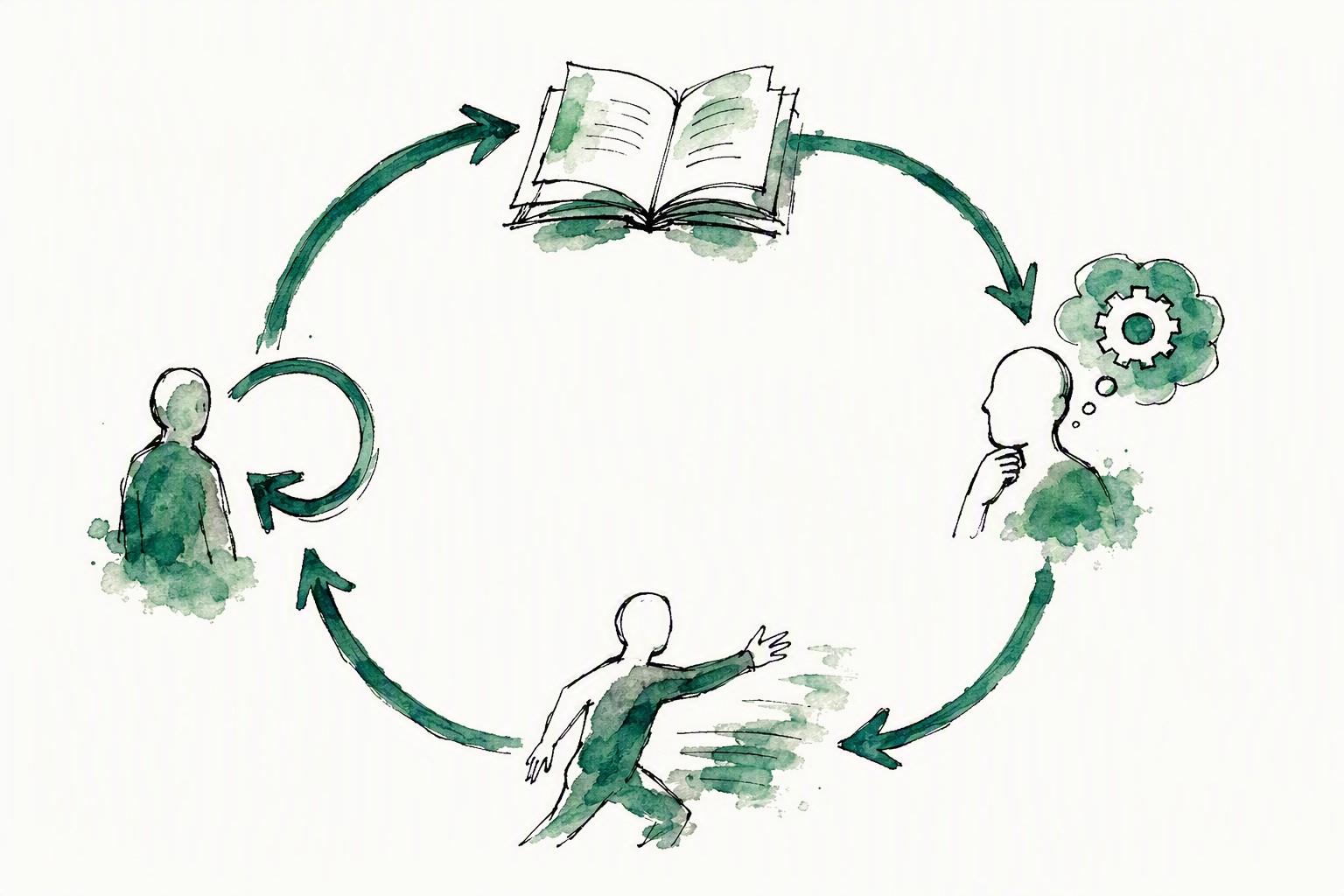
The gap between knowing and doing
A knowledge system can tell an employee what the return policy is. It cannot process the return. A knowledge system can surface a document about how a client account was set up two years ago. It cannot update the account when something changes.
An automation tool can process a return that fits the pattern it was built for. It cannot handle the return that comes in with a torn label and a customer who wants a partial refund and an exchange, because nobody wrote a rule for that exact combination, and nobody ever will, because there will always be another combination after it.
The work that actually consumes people's time sits in the space between these two camps: work that requires knowing something and then reasoning about what to do with it, not just retrieving an answer or executing a fixed rule.

A four part loop, not a static category
Rather than treat "knowledge" and "automation" as competing categories, it is more useful to think of AI's role in a business as a loop with four parts.
Know. This is the same job traditional knowledge systems already do: hold what the organization knows. Documents, policies, past decisions, client history, product detail. Nothing new here except that the system holding it should be reachable by everything downstream of it, not sitting in a separate silo.
Reason. This is the step most software has never had. Given what is known, work out what applies to this specific situation, what is missing, and what should happen next. Not a lookup. An actual judgment call, made the way a competent employee would make it, using the context available.
Act. Once a judgment has been reached, act on it. Update the record. Send the response. Route the case. Create the document. This is the step that turns a decision into a completed piece of work instead of a note that someone still has to act on later.
Learn. Every completed piece of work is evidence. Did the decision hold up. Did the customer come back with the same issue. Did a human reviewer correct the outcome. Feed that back in, and the next pass through the loop starts from a slightly better position than the last one.
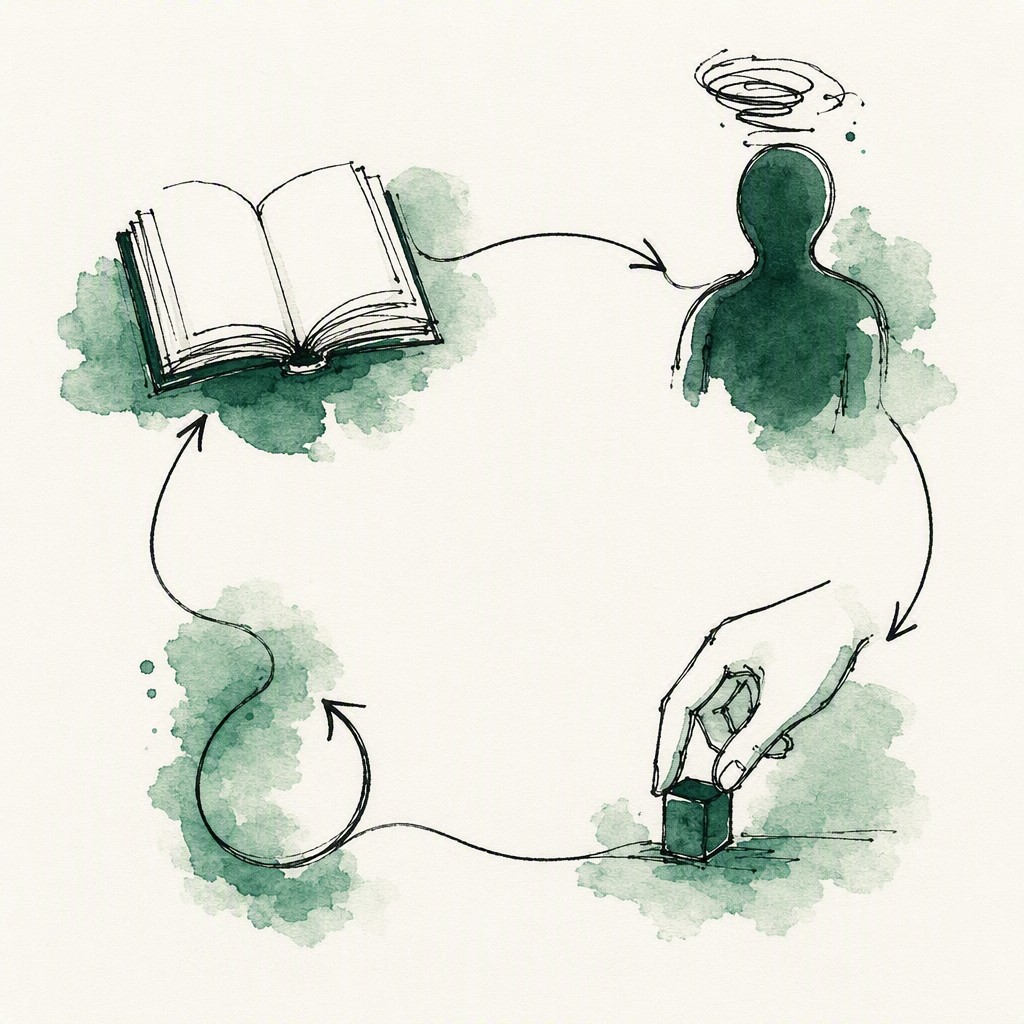
Most existing software does one or two of these steps well and stops. Knowledge systems know. Automation acts, within narrow limits. Almost nothing does all four, continuously, on the same piece of work.
Why this framing matters more than picking a category
If you try to place Mint into either of the old camps, you will describe it wrong. Call it a knowledge system and you miss that it actually does the work, not just answers questions about it. Call it automation and you miss that it can handle the cases nobody wrote a rule for, because it is reasoning about the specific situation rather than matching it against a fixed pattern.
The four part loop is a better description because it says what actually has to happen for AI to take on real work, not just talk about it. Know without reason is a search bar. Reason without act is an opinion nobody used. Act without learn repeats the same mistakes indefinitely. All four, connected, is what turns "the AI understood the situation" into "the situation is actually handled, and handled a little better next time."
What this means in practice
For an organization deciding where AI should show up first, the four part loop gives a useful test. Look at a piece of work that is currently manual, and ask which part of the loop is missing.
If the answer is "we don't actually know what's true," the gap is knowledge, and no amount of automation will fix it until that is solved first.
If the answer is "we know what's true, but nobody has time to work out what it means for this case," the gap is reasoning, and that is exactly the kind of long tail work traditional automation was never built to reach.
If the answer is "we know what to do, we just never get around to doing it," the gap is action, and that is often the simplest one to close, once the first two are in place.
If the answer is "we did it, but we have no idea if it actually worked," the gap is learning, and it is the one most organizations skip entirely, which is why the same problems tend to resurface.
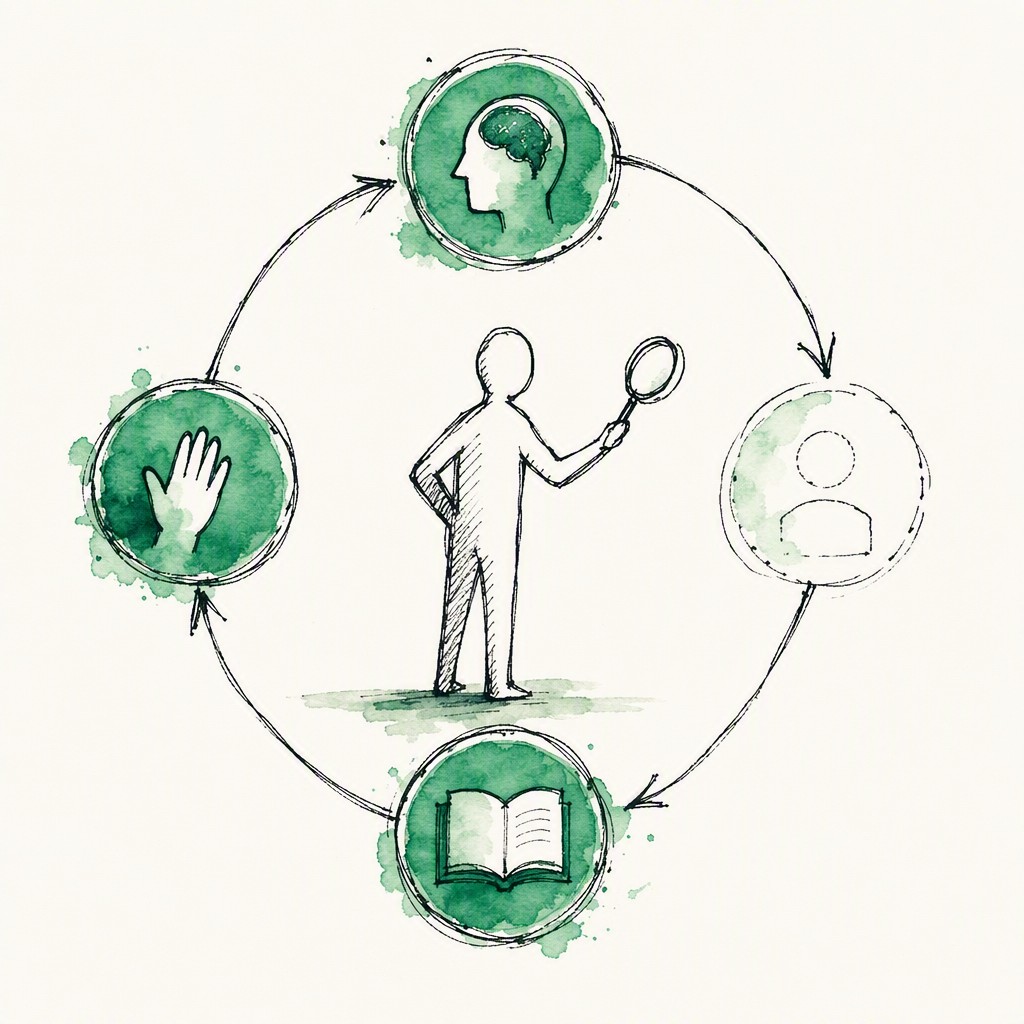
Whichever gap is widest is usually where AI belongs first. Not because it is the flashiest use case, but because it is the one actually blocking the work from getting done.
Mint is built around this loop. Organizational know-how, turned into executable intelligence, continuously: know what the business knows, reason about what a specific situation requires, act on that reasoning through governed agentflows, and learn from what happened so the next pass starts from a better position.
Part of the Controlled Autonomy series: