August 20, 2026 • 5 min read
Safe Doesn't Mean Cautious. It Means Controlled.
Ask a room of operations leaders what worries them about putting AI into a real business process, and you'll hear a version of the same question every time:
"What happens when it's wrong, and how would we even know?"
It's a fair question, and most of the industry's answer to it has been unsatisfying. Either the AI stays confined to low-stakes demos that never touch a real system, safe, but useless, or it gets deployed with the same blind trust given to a junior hire on their first day, with no equivalent of a manager checking the work. Neither is a real answer.
The actual answer isn't "make the AI cautious." It's "make the AI's autonomy match the stakes of the job, and make what it does visible enough to trust."
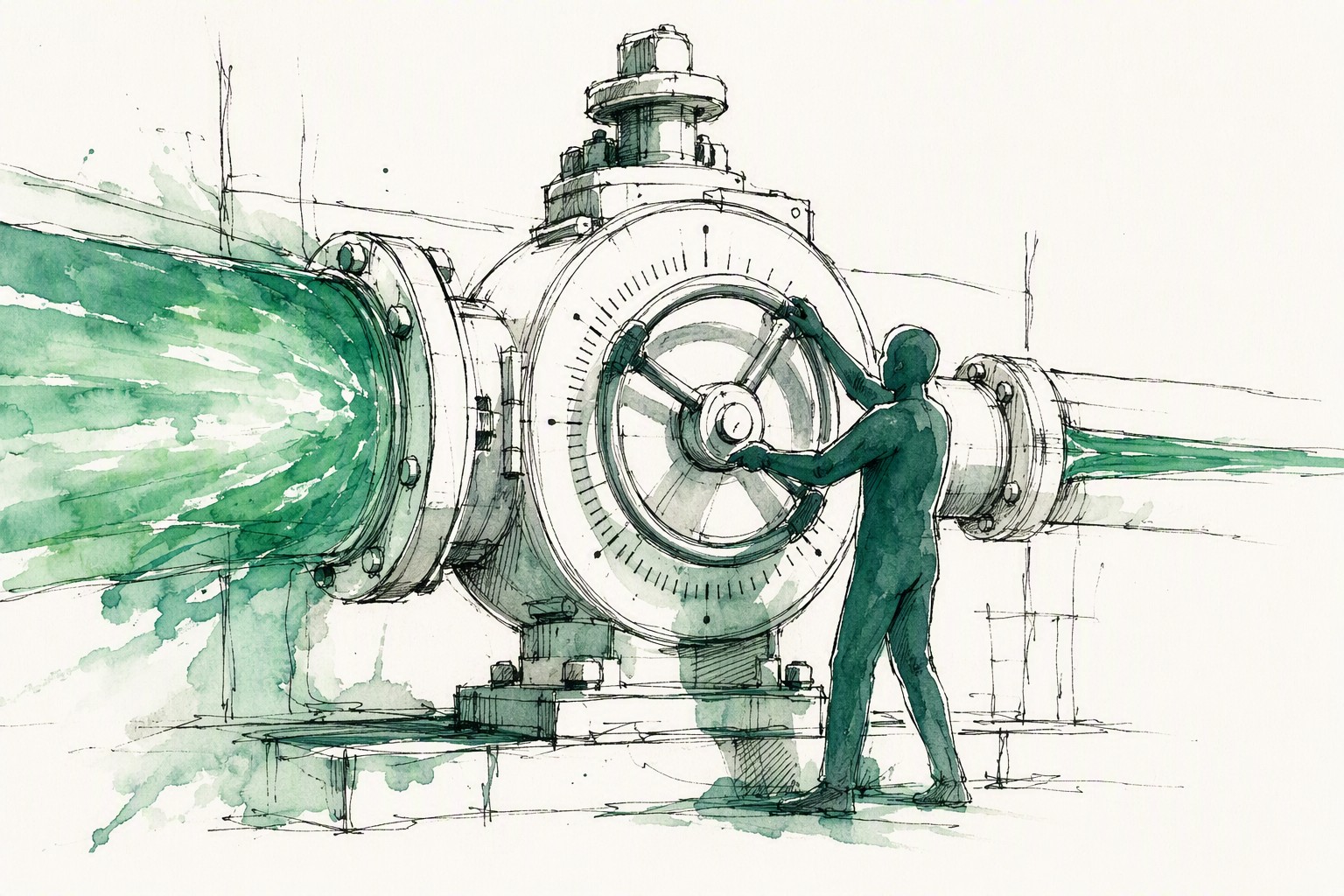
Safe means controlled autonomy, not zero risk
That distinction matters more than it sounds. Zero risk isn't a real option for anything that does real work, a human employee carries risk too. The question worth asking isn't "how do we eliminate risk," it's "how much autonomy does this job actually require, and how much control does the business actually need to keep."
That's a design decision, not a hope. It has to be made before the work runs, during the work, and after the work, not just bolted on as a disclaimer.
Before execution, the controls are about scope:
- Permissions — what this piece of work is even allowed to touch
- Scoped knowledge access — what information it can see, and what it can't
- Tool restrictions — which systems it can act on, and which it can only read
- Model selection — matching the right model to the sensitivity of the job
- Standing policies and spend limits — the guardrails that don't get renegotiated per task

During execution, the controls are about behavior:
- Human approval gates on the steps that warrant a second look
- Structured, observable agentflows instead of an opaque single call to "go figure it out"
- Validation steps between stages, not just at the end
- Explicit boundaries on what a given agent or tool is allowed to do
- Monitoring, retries, and fallbacks when something doesn't go as expected

After execution, the controls are about accountability:
- Continuous evaluation of output quality — not a one-time test before launch
- Human feedback loops that actually change future behavior
- Performance history — so "how has this held up" is answerable, not anecdotal
- Cost monitoring, so nothing accumulates spend unnoticed
- Audit and investigation — so if something goes wrong, you can find out exactly what happened and why
Put together, that's not a slogan. It's a specific, checkable answer to "what happens when it's wrong, and how would we know" for every one of those three phases, not just one.
Why this changes what you can actually deploy
The organizations moving fastest with AI right now aren't the ones being the most cautious. They're the ones who built the control layer first, so they can afford to give AI more real work without it becoming a governance problem later.
Without that layer, every new use case becomes a fresh argument: can we trust this with customer data? Who signs off if it makes a call that affects a customer? What do we tell an auditor if they ask what happened? Those questions get litigated from scratch, every time, and the honest answer is usually "let's not risk it yet," which is how AI adoption stalls at pilots that never turn into production.
With the control layer built in from the start, the same questions have standing answers. The scope of autonomy for a given job is a configuration, not a debate. What happened during any run is something you can actually go look at, not something you have to reconstruct from memory. That's what turns "we ran a pilot" into "this runs continuously and we trust it enough to expand it."

The real trade-off, stated plainly
Controlled autonomy isn't free. It takes more setup than turning a model loose on a task and hoping. It means some agentflows will always have a human step in them, on purpose, because the stakes call for it. It means slower rollout of the highest-risk use cases, by design.
That's the trade worth making. The alternative, deploying AI on real business work without a real answer to "how would we know if it went wrong," isn't actually faster. It's just deferring the cost of finding out the hard way.
SafeFoundry builds Mint around exactly this principle: give AI as much autonomy as the job requires, and keep as much control as the business requires, before, during, and after every run.
Part of the Controlled Autonomy series:
- The Work That Falls Between Your Systems
- Safe Doesn't Mean Cautious. It Means Controlled.
- Why We Don't Call Mint an Agent Platform
- The Four Jobs Organizations Actually Hire AI For
- Know, Reason, Act, Learn (publishing soon)